Search This Blog

Thursday, July 16, 2015

GPS Network Marks its 20th Anniversary

As reported by the Denver PostIt's hard to imagine life without GPS technology.
We rely on it daily to navigate cities, schedule flights, receive severe weather warnings and check in on Facebook.
A mere two decades ago, it was not even a thing.
This week marks the 20th anniversary of the Global Positioning System being declared fully operational by the U.S. Air Force.
Since that time — July 17, 1995, to be exact — GPS technology has become commonplace in both military and civilian life.
What few realize is that the worldwide GPS network is a military operation — provided for free — operated right here in Colorado by the 2nd Space Operations Squadron at Schriever Air Force Base in Colorado Springs.
"Since 1995, GPS has been the gold standard for global space-based navigation, providing highly reliable and accurate navigation and timing signals to users around the world," said Air Force Space Command chief Gen. John E. Hyten in a statement.
Space-related projects like GPS contribute about 163,000 jobs to Colorado, making the state first for the amount of private aerospace workers per capita, according to data from the Metro Denver Economic Development Corp.
There are 4 billion GPS-enabled devices worldwide — a number that's expected to double in the next five years — and the global GPS market is estimated to reach more than $26 billion in value by 2016, per the EDC.
This can only help Colorado because geospatial technologies, remote sensing and satellite-based services make up the bulk of the state's space economy to the tune of $6.3 billion in annual revenue, according to the EDC.
On Wednesday, Centennial-based United Launch Alliance added another satellite to the $3.6 billion GPS network with the launch of GPS IIF-10 from Cape Canaveral, Fla.
In fact, every operational GPS mission has been launched by ULA or vehicles from the two companies that make up ULA: Littleton-based Lockheed Martin Space Systems' Atlas rocket or Boeing's Delta rocket.
Gov. John Hickenlooper will declare Friday as "GPS Day" to recognize the myriad contributions of Colorado companies, among them ground control systems from Aurora-based Raytheon and Colorado Springs-based Braxton Technologies, and next-gen GPS technologies, such as the forthcoming GPS-III satellites from Lockheed Martin Space Systems.

If Tesla Designed a Motorcycle: The Tesla Model M Concept

As reported by HiConsumptionTesla’s four-wheeled offerings have been a huge hit among automotive enthusiasts, so we can only imagine just how nuts fans will go if/when the brand ever reveals a 2-wheeled electric vehicle. Independent designer Jans Slapins shows us what he thinks Elon Musk and company could cook up with this Tesla Model M motorcycle concept.

The London-based designer has done a stellar job with the concept bike, keeping the design aesthetics in line with what we’ve become accustomed to from the California EV producer. The bike is powered by a 204 PS (150kW) electric motor that allows the rider to choose from four different computer controlled modes including Race, Cruise, Standard and Eco. The electric motor is powered by lithium-ion batteries that are installed low on the bike’s frame. The motorcycle features no transmission, offers up a trunk storage space where the fuel tank would normally be (perfect for holding a full face helmet), lightweight carbon fiber wheels, and a mono shock out back along with upside down forks up front for suspension. [Via]

Wednesday, July 15, 2015

Great Photos of Earth From the World's Smallest Satellites

 As reported by CNN: How big is a satellite? As big as a washing machine? A car? A bus?

The average size of communication satellites orbiting the Earth is about that of a car. But there are extremes, such as the NROL-32, a spy satellite launched by the United States in 2010, which has an antenna spanning 328 feet across, or nearly 100 meters.
But among the flying giants, a new breed is spreading its wings.
Planet Labs, a Californian startup which had its beginnings in a garage in 2012, is pushing satellite miniaturization to its limits. Last year, they launched Flock 1, an array of 28 satellites that now constitutes the world's largest constellation of Earth imaging satellites.
They are called Doves, their mission is to map every inch of the planet, and each of them is no larger than a shoe box.
Mapping every inch of the planet every day
Mapping every inch of the planet every day 03:52

A Sputnik with a camera

The 1957 Sputnik satellite.
Chris Boshuizen is the co-founder and CTO of Planet Labs. His previous job title was "Space Mission Architect" for NASA. Not a bad starting point.
    "As far as I remember, even as a kid I was always fascinated by the Moon and it seemed irrational to me that I couldn't go there," he told CNN's Nick Glass.
    But for NASA, Chris was not planning multi-billion dollar missions to the Moon. Instead, he worked on the PhoneSat project, aimed at creating super-cheap satellites: "We literally built an Android smartphone, placed it in a box and put it in space. It was essentially like the Russian satellite Sputnik, but cheaper and able to take photos. It was Sputnik with a camera."

    Learning to fly

    That's how Boshuizen learned to be frugal when designing spacecraft. Instead of creating a complex, expensive and large machine, his approach is to build several cheap ones, which can act together like a swarm of insects.
    "If any of our small satellites has any deficiencies, we can make up for that with quantity. And so the first application we came up with was Earth imaging: if we could put hundreds of cameras in space we could actually do real-time monitoring of the Earth and its climate, to help people make better decisions about their impact on the environment."
    In 2012 he founded Planet Labs with a few friends, operating out of a garage in Cupertino, California. The perfect start for a startup.
    Today, his mission statement is clearly posted on Planet Labs' website: "Fresh data from any place on Earth is foundational to solving commercial, environmental, and humanitarian challenges."

    A shoe box in space

    iss038e047230 2-14-14
    Boshuizen's satellites are solar powered, producing around 20W each.
    Their name, Doves, started out as a joke: "I was having a conversation with one of our engineers, Mike Safyan, who was complaining that most military satellites have kind of evil names like Kestrel-Eye and Talon and Raptor. He said, 'Why don't we call ours Dove?' And it was just a joke, but what that means, how that speaks to our missions is profound, so instead of launching a constellation of satellites, we're launching a flock of doves."
    The current flock of 28 will be joined by about 30 more over the next few months, with the goal of eventually reaching a constellation density of about 100.
    That is, if fate doesn't intervene again.

    White Dove down

    On October 28th, 2014, an Antares rocket carrying 26 Doves destined for orbit exploded fourteen seconds after launch. Other than that, there were no injuries.
    Rockets are fantastically complicated machines, and they fail: "I was watching the live-stream of the video, and I have this great photograph of everyone's jaw hanging open where they were like, 'What just happened?!', and I walked up to my co-founder Robbie and just gave him a big hug and he just said that this was bound to happen one day."
    The setback has slowed down Planet Labs' technological progress, but the company still plans to offer their services commercially soon, and at prices containing "at least one zero less than a conventional satellite."
    The Doves stored on the ground before launch.
    Aquaculture in the small town of Hanjia-Ri, South Korea.
    The Kashima industrial zone in the Ibaraki prefecture, Japan.
    Planet Labs have plans to bring their constellation up to around 120 Doves.


    Watch an Atlas V Rocket Launch a GPS Satellite into Lower Earth Orbit

    As reported by the Verge: It's a busy week for space travel. Today, two separate rockets are scheduled to launch payloads into lower Earth orbit — one from the United States, the other from French Guiana.
    The first of these launches will be helmed by the United Launch Alliance, a joint venture of Boeing and Lockheed. The company's Atlas V rocket will take off from Cape Canaveral, Florida, carrying a GPS satellite to orbit for the Air Force. This is ULA's 10th launch of 12 GPS satellites for the Air Force — part of the GPS IIF satellite series meant to help sustain and upgrade the military's current constellation in space.
    ULA has an 18-minute launch window beginning at 11:36AM ET. Watch the takeoff at ULA's website, with coverage starting at 11:16AM ET. Also check out the satellite getting mounted onto the rocket below.

    Tuesday, July 14, 2015

    Google to Reopen Map Maker Editing Tool After Closing it Due to Abuse

    As reported by ITWorld: After halting the service due to an influx of spam, Google is ready to open Map Maker again, with changes that hand much of the control back to users.

    Map Maker lets people update the information in Google Maps to make it more accurate. The service will reopen in phases starting early next month, Pavithra Kanakarajan of the Google Map Maker team said in a blog post Monday.

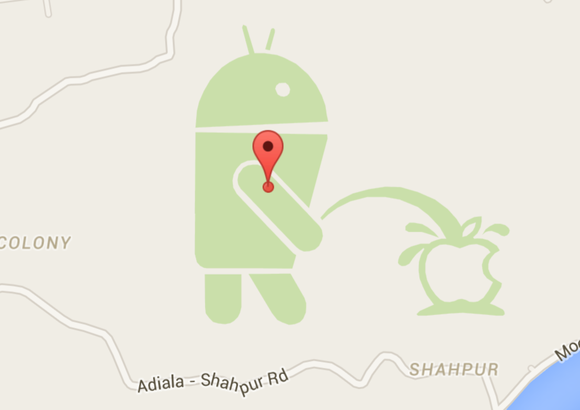
    Google suspended the service in May after a rash of unwanted edits. In one prominent case, a prankster drew the Android mascot urinating on the Apple logo. Google turned off user moderation and started reviewing edits manually itself, but that caused a huge backlog and eventually it suspended Map Maker altogether.

    With the reopening, Google will again ask users to review edits, but in a different way. It will select mappers in each region around the world and invite them to become “regional leads.” Edits will be reviewed by those leads, though also by Google’s automated systems. Google’s employees will only occasionally moderate edits, Kanakarajan said.

    The new process means some changes might take longer to go through. But Google, apparently, thinks handing the reins to a select few mappers will lead to better quality edits.

    “The reason for this change is that every time we observed someone attempting to vandalize the map, many of you acted quickly to remove the offending feature and demonstrated real ownership for maps within your region,” Kanakarajan wrote. “We have come to the conclusion that of all the defenses available to keeping our maps clean, the interest of a community of well-intentioned users, is among the most reliable and fast.”

    Monday, July 13, 2015

    Life Without Smartphones Is Hard to Imagine, According to Nearly Half of U.S. Smartphone Users

    As reported by EntrepreneurThe devices have only been around for a decade, but already they have so fundamentally infiltrated our day-to-day that for many of us, life can be broken down into two distinct eras: before and after the advent of the smartphone.

    That's a reasonable takeaway from a recent Gallup poll of nearly 16,000 U.S. smartphone users which found that nearly half of respondents (46 percent) agreed with the statement, "I can't imagine my life without a smartphone."
    On its surface, that’s a dramatic (and vague) statement, but answers to some of Gallup's following questions paint a good picture of the sneaky, vital and constant ways smartphones have come to shape the way we live.
    Smartphone users tend to keep our phones nearby at all times; in a previous Gallup poll, 81 percent of smartphone users keep their phones nearby for the entire day, and 72 percent report checking the device hourly. Which honestly, seems like monumental restraint (writing this, I checked my phone for a text alert, to use the calculator, and just….because).   
    Image result for smartphone improve livesOur smartphone attachment doesn't end when the day does, either: Sixty-three percent of smartphone owners also bring their devices to bed with them.
    Despite this dependence, the vast majority of respondents (70 percent) report that smartphones have improved their lives.
    Image result for smartphone improve livesTaken together, that nearly half of respondents can't envision a life without their smartphones isn't too surprising. The devices have become our constant companions; we rely on them to wake us up in the morning, get us where we need to go, answer email and a thousand other things.
    "The smartphone is transformative for those who use it, not only by making their lives better, but by becoming something of a fifth limb," Gallup writes.

    Saturday, July 11, 2015

    New Record For Solar-Powered Autonomous Flight: 28 Hours Without Refueling

    As reported by RoboHubThe AtlantikSolar Unmanned Aerial Vehicle took off on June 30th, 2015 at 11:14 o’clock to attempt the “holy grail” of solar-powered flight: the crossing of a full day-night cycle on solar power alone. More than 28 hours later, on July 1st at 15:35, the aircraft landed safely and with fully recharged batteries, thus showing AtlantikSolar’s long-endurance flight capability. This is of significant interest for large-scale disaster support, industrial inspection or meteorological observation missions, especially in the compact form of a hand-launchable 7kg UAV such as AtlantikSolar.
    The flight was performed at the Rafz RC-model club airfield in excellent sun conditions. After take-off at 11:14, with batteries charged to 57%, the aircraft was quickly setup to follow an efficient and fully-autonomous loitering path, which allowed a completed battery-charge by 14:08 o’clock.
    atlantiksolar
    The midday and afternoon were characterized by strong thermal up- and downdrafts, but enough power was generated by the solar panels to keep the batteries full. Their discharge started only when the sun slowly went down at around 19:30.
    The night flight provided calm conditions, with the autopilot keeping the aircraft stable despite horizontal winds of up to 5m/s, and the safety pilots keeping a good eye on the aircraft using its position indicator lights. Flying at an average airspeed of 8.4m/s (the point of minimum sink rate) and an average power consumption of 43W during the night, the aircraft received first sun at around 5:50 o’clock, and maintained a minimum charge of around 35% until the solar modules regenerated enough power to stay airborne.
    After 24 hours of continuous flight, the aircraft had recharged its batteries to 84%, a significantly higher state-of-charge than the day before. The batteries were in fact fully charged by 12:43 o’clock – one hour and twenty-five minutes earlier than the day before.
    AtlantikSolar_landing
    AtlantikSolar landed safely at 15:35, thereby setting a new Swiss endurance record for unmanned solar-powered flight, and improving upon the previous internal record (ASL’sSky Sailor) by a over an hour.
    The project’s next goal is to extend the flight duration to more than 80 hours (3 days), in order to beat the old endurance record for solar-powered UAVs below 20kg (48h flight by the 13kg SoLong UAV in 2005) by more than a day. If it is able to achieve an 80-hour flight endurance, the 7kg AtlantikSolar would be the third-longest flying aircraft in the world, only behind Airbus Space’s 53kg Zephyr and the 2300kg Solar Impulse 2.
    We’d like to thank everybody who made this flight possible — including all project partners and collaborators, the Rafz Model airfield club, and our safety pilots — for working so hard and making this big step in the project possible.
    The AtlantikSolar project was developed at the Autonomous Systems Lab at ETH Zurich